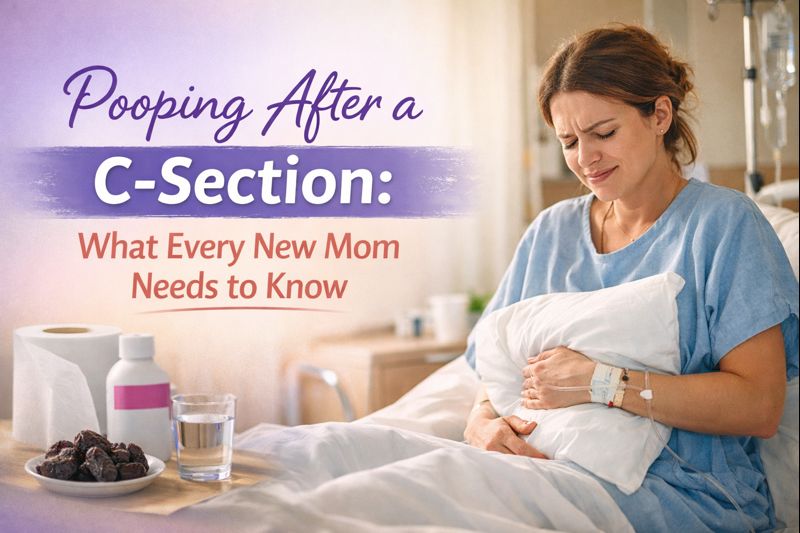
Struggling with bowel movements after a C-section? Learn why pooping is difficult after cesarean birth and how to make it easier and less painful.

Introduction:
The first time you need to poop after a C-section can feel more terrifying than the surgery itself.
Nobody prepares you for this moment. No discharge paper explains it. No one casually mentions how something so natural can suddenly become one of the most anxiety-filled experiences of early motherhood.
You’re not alone. Almost every woman who has had a C-section has stared at the toilet in fear, wondering how her body still sore, stitched, and healing will manage this simple act.
Let’s talk honestly about why pooping after a C-section is so difficult, what’s happening inside your body, and how to make it easier and safer.
Why Is Pooping After a C-Section So Hard?
A C-section is major abdominal surgery, not just a different way to give birth. Multiple layers of muscle and tissue are cut, your organs are moved, and your body needs time to recover.
Several things work against normal bowel movements after surgery.
1. Anesthesia Slows Everything Down
The spinal, epidural, or general anesthesia used during a C-section temporarily slows your digestive system. Your intestines go into a kind of “sleep mode,” known medically as postoperative ileus.
This means stool moves very slowly or not at all for the first few days.
2. Pain Medications Cause Constipation
Strong pain medications, especially opioids, are well known for causing constipation. While they help control incision pain, they also make stools harder and more difficult to pass.
It’s an unfair trade off but a very real one.
3. Fear of Hurting the Incision
Almost every mom has the same thought:
“If I push, will my stitches open?”
That fear causes you to tense the very muscles that need to relax. The mental block alone can stop a bowel movement, even when your body is ready.
4. Dehydration After Surgery
Between blood loss, breastfeeding, sweating, and limited fluid intake, dehydration is common after delivery.
Less water in your body = harder stools.
5. Weak Abdominal Muscles
Your core muscles have been cut and are healing. These muscles normally help with bowel movements, so when they’re compromised, pooping feels much harder than usual.
The Emotional Side No One Talks About
Struggling to poop after a C-section isn’t just physical it’s emotional.
You’re caring for a newborn while feeling vulnerable, sore, and exhausted. Many women feel embarrassed, frustrated, or even ashamed. Some cry in the bathroom, wondering why their body feels so broken.
One mother said:
“I was so scared that I held it for four days. When it finally happened, the relief was emotional as much as physical.”
Nothing about this makes you weak. Your body is healing from surgery and sustaining new life.
What Actually Helps: Real Solutions
Start Stool Softeners Early
Don’t wait until you’re constipated. Doctors often recommend docusate sodium (Colace) starting soon after surgery. Stool softeners make bowel movements easier without straining.
Hydration Is Non-Negotiable
Aim for 10–12 glasses of water a day, especially if you’re breastfeeding. Keep water within arm’s reach at all times.
Think of water as part of your pain management plan.
Add Fiber Gradually
Once cleared to eat normally, add fiber slowly:
- Prunes or prune juice
- Oatmeal
- Pears
- Cooked vegetables
Too much fiber too fast can cause painful gas—go slow.
Move as Soon as You’re Allowed
Gentle walking stimulates digestion. Even short walks around your room or hallway can wake up your bowels and reduce gas pain.
Use the Right Bathroom Position
A small stool under your feet helps mimic a squatting position, which straightens the rectum and makes pooping easier.
Hold a pillow gently against your incision for support , it won’t open.
Breathe, Don’t Push
Avoid holding your breath and straining. Instead:
- Breathe out slowly
- Relax your pelvic floor
- Let the movement happen naturally
This protects your incision and reduces pain.
Talk to Your Doctor About Medications
If pain meds are causing severe constipation, ask about alternatives or combining ibuprofen and acetaminophen instead of stronger opioids.
Natural Comfort Options
Some moms find relief with:
- Warm lemon water
- Slightly warmed prune juice
- A teaspoon of coconut or flaxseed oil
Always check with your doctor before trying anything new.
When to Call Your Doctor
Contact your healthcare provider if:
- You haven’t pooped within 4–5 days
- You have severe abdominal pain or vomiting
- You see significant blood in your stool
- You develop fever or increasing pain
How Long Does This Last?
Most women have their first bowel movement 2–4 days after a C-section. By the second week, digestion usually improves significantly.
Healing is gradual. Be patient with your body.
You Will Get Through This
That first poop after a C-section may feel like climbing a mountain—but you will reach the top.
Your body is not failing you. It’s healing from surgery while caring for a newborn.
Ask for help. Take your time. Protect your comfort.
Because yes—your ability to poop comfortably matters.
And you deserve recovery with dignity, compassion, and ease as you begin this new chapter of motherhood.
Frequently Asked Questions (FAQ): Pooping After a C-Section

❓ How long does it take to poop after a C-section?
Most women have their first bowel movement 2 to 4 days after a C-section. For some, it may take up to 5 days, especially if strong pain medications were used.
❓ Is it normal to be scared to poop after a C-section?
Yes, absolutely. Fear of pain or stitches opening is very common. This fear can actually make it harder to go. The incision is strong and supported—gentle bowel movements will not cause it to open.
❓ Can pushing while pooping open my C-section stitches?
No. Normal bowel movements will not open your stitches. Doctors securely close multiple layers during surgery. Avoid straining hard, but gentle pushing is safe.
❓ What helps the first poop after a C-section?
The most helpful things include:
- Stool softeners (doctor-approved)
- Drinking plenty of water
- Gentle walking
- Using a foot stool in the bathroom
- Holding a pillow against your incision for support
❓ Should I take stool softeners after a C-section?
Yes, many doctors recommend stool softeners for the first few days after surgery. They make bowel movements easier and reduce the need to strain.
❓ Does anesthesia cause constipation after a C-section?
Yes. Anesthesia slows down the digestive system, making bowels sluggish for a few days. This is one of the main reasons pooping feels difficult after surgery.
❓ Can pain medication worsen constipation?
Yes. Strong painkillers, especially opioids, are known to cause constipation. If constipation becomes severe, talk to your doctor about adjusting medications.
❓ What foods help with constipation after a C-section?
Helpful foods include:
- Prunes or prune juice
- Oatmeal
- Fruits like pears and apples
- Cooked vegetables
- Warm fluids
Introduce fiber slowly to avoid gas and bloating.
❓ When should I call a doctor about constipation after a C-section?
Call your doctor if:
- You haven’t had a bowel movement after 4–5 days
- You have severe abdominal pain
- You experience vomiting or fever
- There is significant blood in your stool
❓ Will pooping get easier as I heal?
Yes. As your body recovers, pain decreases and digestion improves. Most moms feel much better within 1–2 weeks after surgery.
❓ Is constipation after a C-section a sign of a problem?
In most cases, no. Constipation is very common after surgery. However, worsening pain, fever, or long-term constipation should always be checked by a doctor.
Disclaimer: This article is for informational purposes only and is not a substitute for professional medical advice. Always consult your doctor or healthcare provider for personalized guidance.
Leave a Reply