
Real talk on the risks, complications, and how to protect yourself when you’re heading into another cesarean.
You Know….
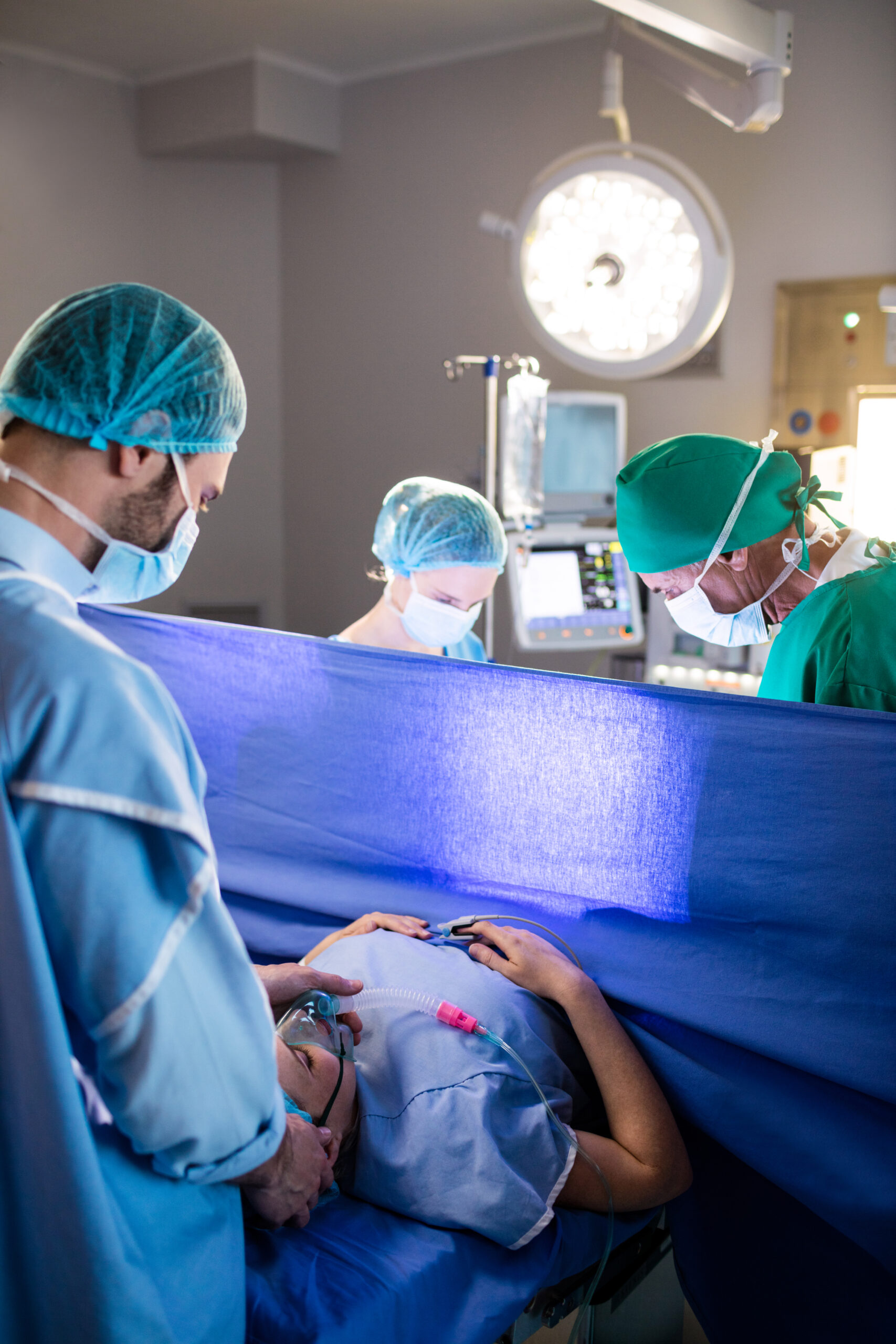
It’s something you’ve done before. You’re familiar with the process—the IV, the blue curtains, the unreal feeling as your baby cries for the very first time. The part nobody has taken the time to sit you down and explain? Your third and fourth cesareans come with complications that differ from the very first. This piece is the discussion that your doctor didn’t have with you yet.
Why Repeat C-Sections Are a Different Beast Entirely:
Let’s be honest , when you’re pregnant again and another C-section is on the horizon, most people around you shrug and say, “Well, you’ve already had one, so it’s no big deal, right?” Wrong. Completely, dangerously wrong.
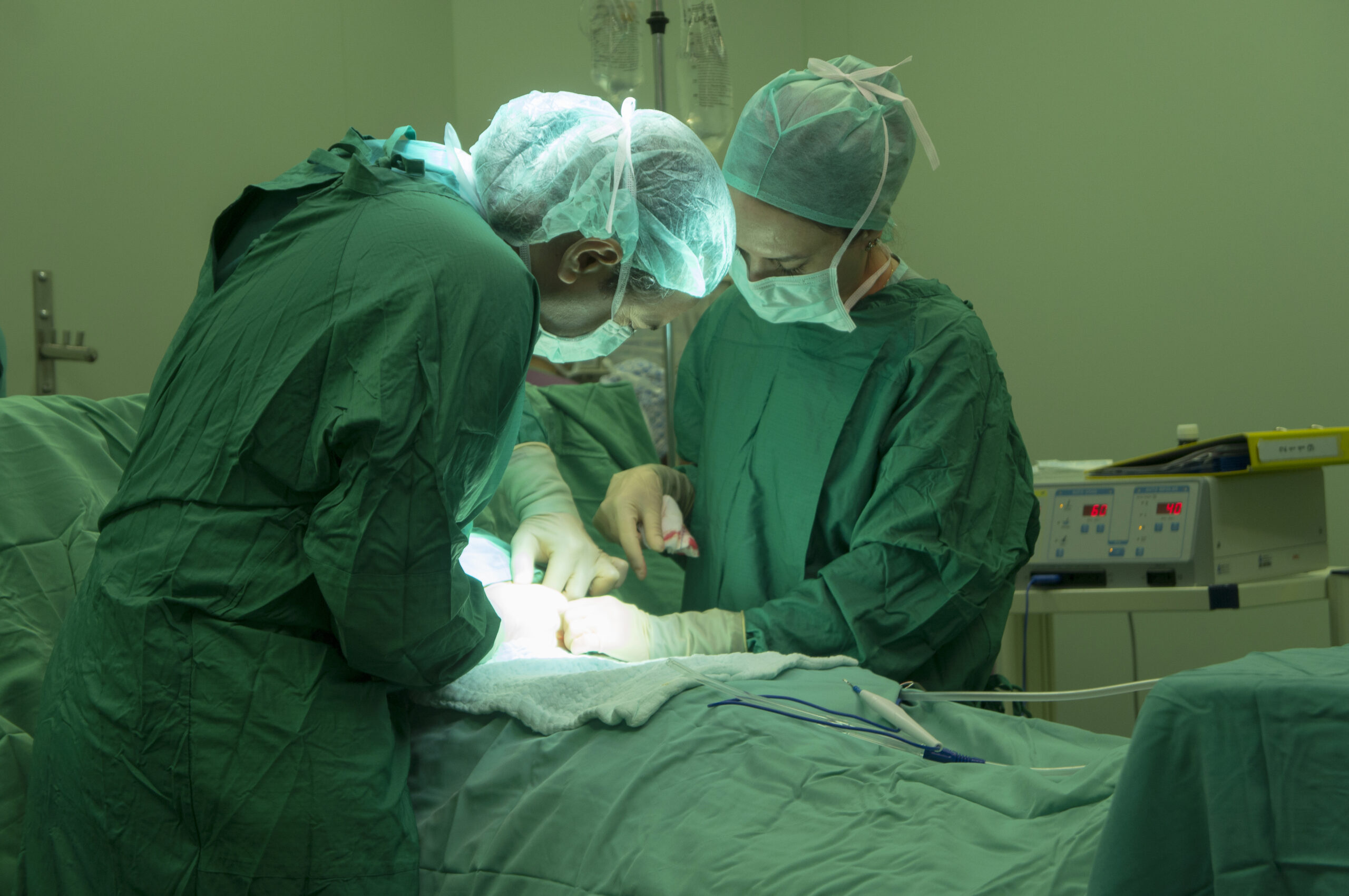
Each cesarean section is a major abdominal surgery. And every time a surgeon cuts through the same layers of skin, fat, fascia, and uterus, the body responds by building scar tissue , a process called adhesion formation. By your 3rd or 4th cesarean, your anatomy may look completely different on the inside than it did the first time. Organs that should slide freely past each other can become fused together. The bladder which sits right in front of the uterus is especially vulnerable.
By the 3rd C-section, surgeons may spend more time carefully separating scar tissue than they do delivering your baby. That’s not a complication that’s the new normal.
This doesn’t mean your birth story has to be a scary one. But knowledge is power and understanding what’s really happening in that operating room puts you in the driver’s seat of your own care.
50%
Higher risk of surgical complications with each repeat C-section
6×
Increased placenta accreta risk after 3 or more cesareans
40 min+
Average extra surgical time due to adhesion removal in repeat procedures
The Big Complications: What You Need to Know :
We’ll go into the details. They are not intended to scare you; rather, they will equip you with the language and knowledge to discuss these issues with your obstetrician ( your maternal-fetal medicine doctor, and your surgeons).’
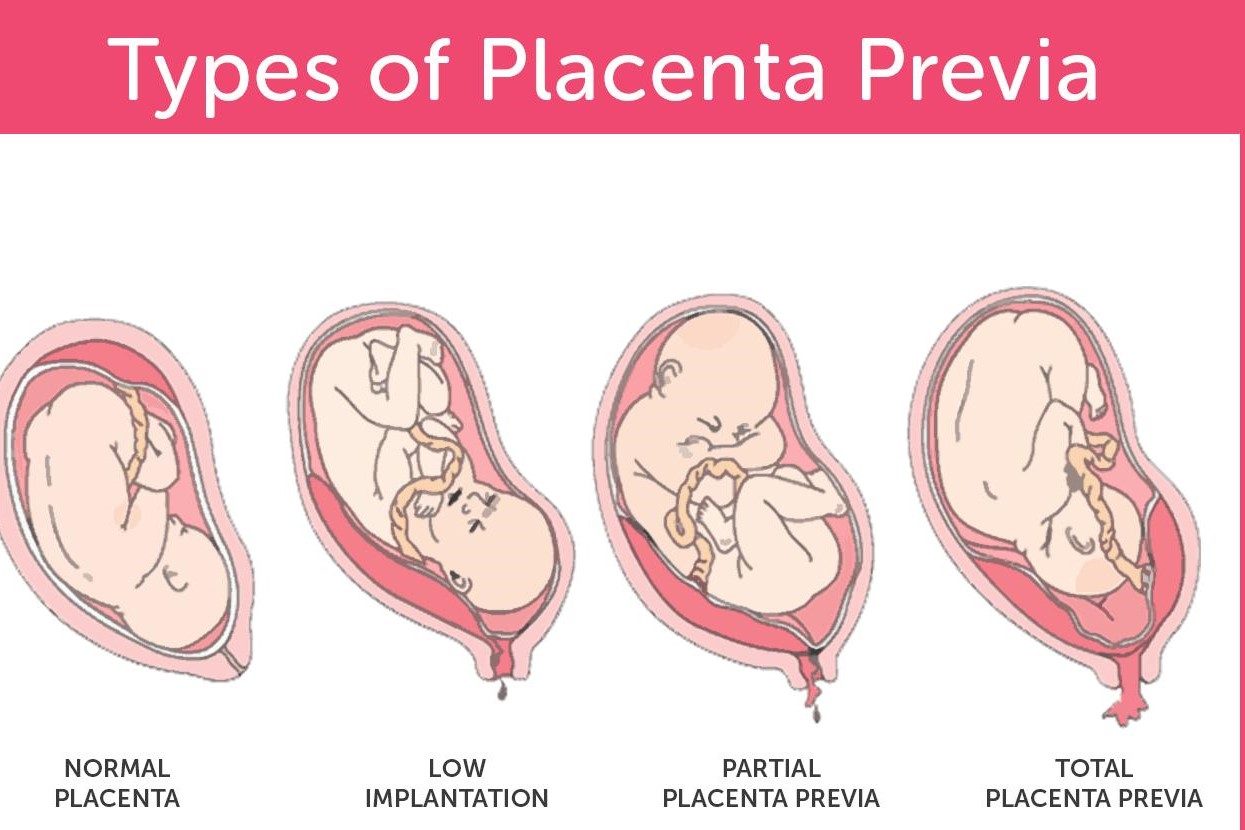
1. Placenta Previa & Placenta Accreta Spectrum (PAS)
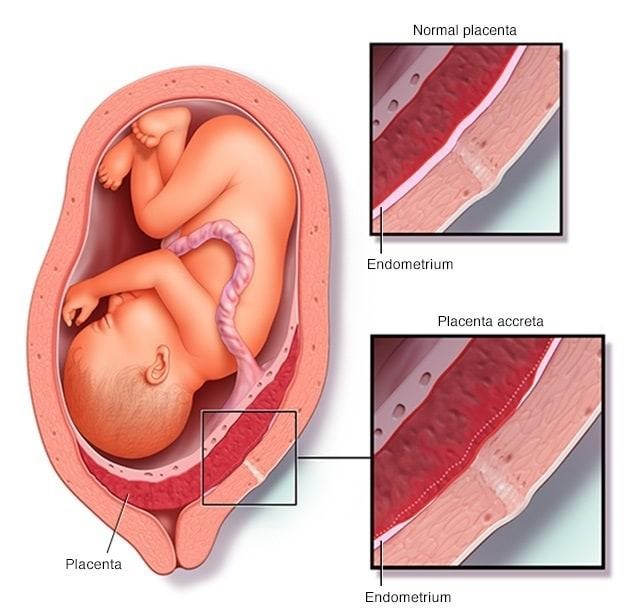
This is the complication that keeps maternal-fetal medicine specialists up at night. After multiple C-sections, the uterine lining in the scar area can become thin and damaged. When the placenta implants in or near this scarred tissue, it can grow abnormally deep or even through the uterine wall.
Placenta Accreta
Placenta accreta is a serious pregnancy condition where the placenta attaches too deeply into the wall of the uterus and does not separate normally after delivery.
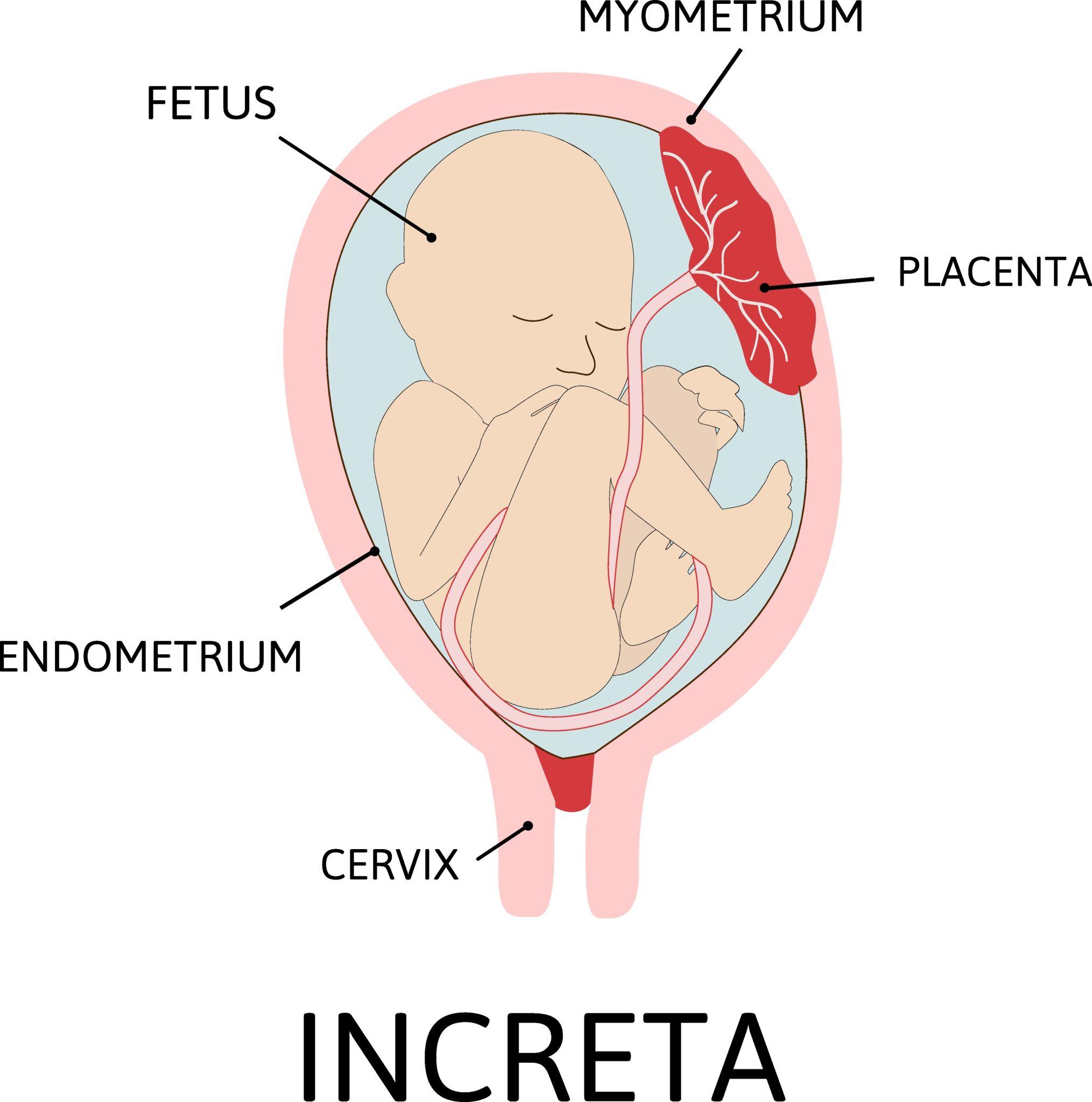
placenta Increta
The placenta grows into the uterine muscle itself, making separation extremely difficult without hemorrhage.
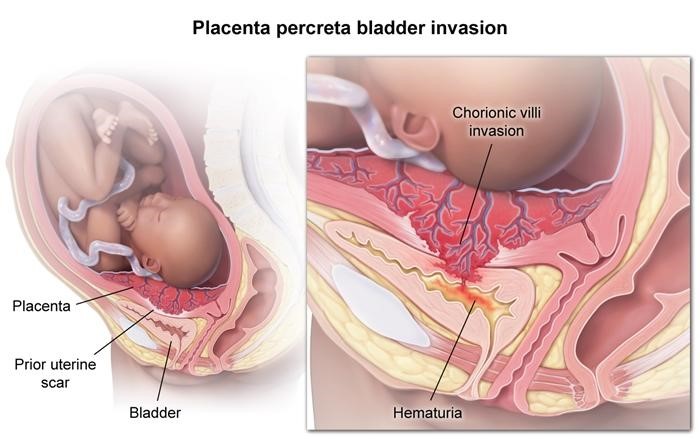
Placenta Percreta
The most severe form — the placenta penetrates through the uterine wall and can attach to the bladder or bowel.
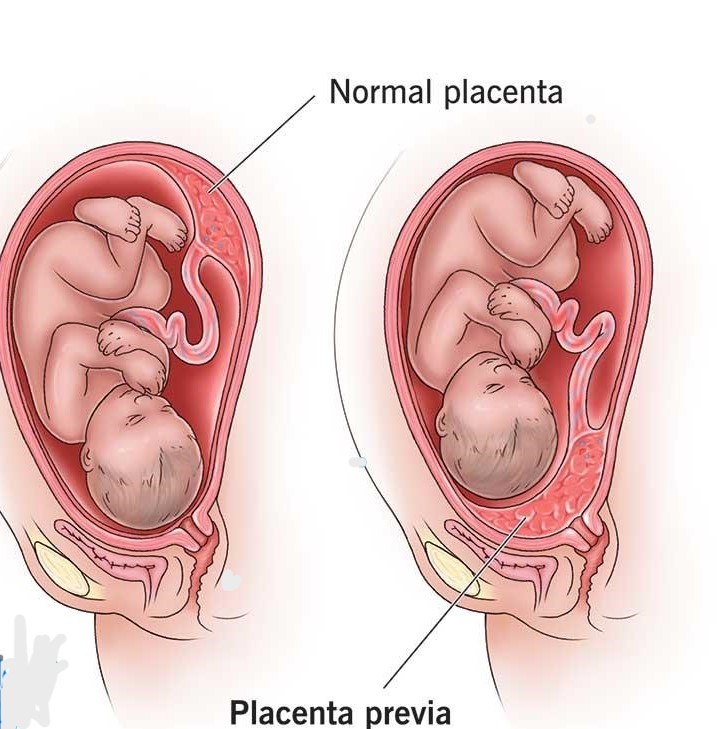
Placenta Previa
The placenta covers the cervix, blocking the birth canal. Scar tissue from prior C-sections increases this risk significantly.
When to Act Fast :
If you experience any painless vaginal bleeding in the second or third trimester of a repeat pregnancy, go to the emergency room immediately. Placenta previa can cause sudden, life-threatening hemorrhage without warning.
2. Uterine Rupture
Uterine rupture means a tear in the wall of the uterus.
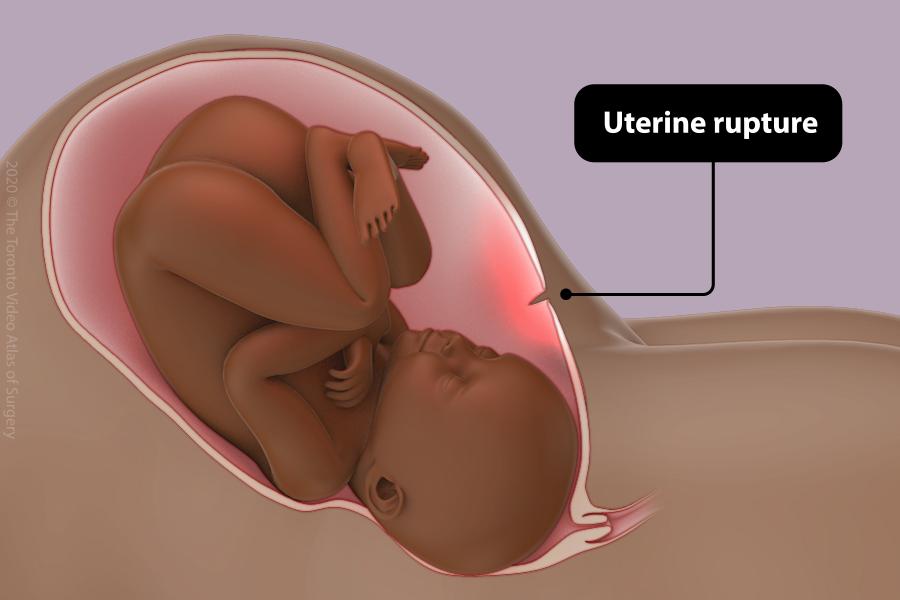
With each C-section, the scar on the uterus becomes a potential weak point. While uterine rupture is still relatively rare, the risk climbs with each additional surgery. A rupture where the uterus tears along the old scar is an emergency that requires immediate surgical action to save both mother and baby.
3. Bowel and Bladder Injury
Adhesions ( Internal scarring) Or ( bands of scar tissue) can literally glue your bladder or intestines to your uterus. When surgeons go in for your 3rd or 4th C-section, separating these structures requires skill, time, and extreme caution. Bladder injuries occur in a meaningful percentage of repeat C-sections, and in severe cases, bowel injury can result in a temporary colostomy.
4. Massive Hemorrhage (life threatening bleeding after delivery)
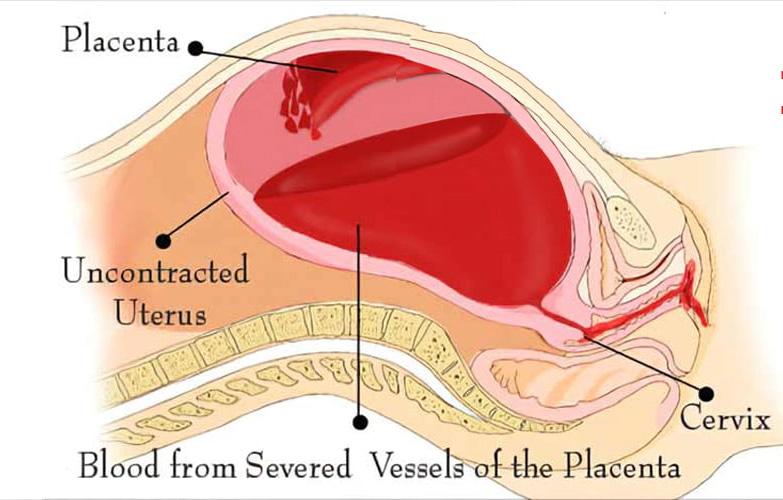
Blood loss during a 3rd or 4th C-section can be significantly greater than during a first or second. Damaged blood vessels in scarred tissue, combined with the potential for placental complications, can lead to hemorrhage that requires blood transfusions or in severe cases, emergency hysterectomy to save a mother’s life.
5. Hysterectomy ( surgical removal of uterrus)
No one wants to hear this word while they’re pregnant. But it’s important to know: in cases of severe placenta accreta or uncontrolled bleeding, removing the uterus may be the only way to stop life-threatening hemorrhage. This is one reason why women planning a 3rd or 4th C-section should ideally deliver at a hospital with a blood bank, a NICU, and surgical specialists on standby.
The Recovery Is Harder And That’s Okay to Admit
Here’s something the mommy blogs don’t always tell you: recovering from a 3rd or 4th C-section is genuinely harder. Not because you’re weaker — but because your body has done this before, and the cumulative toll is real.
Longer surgery time means more anesthesia, more time under stress, and more tissue trauma. Adhesion removal can leave internal raw surfaces that take longer to heal. The pain can be more intense, and the recovery timeline can stretch beyond what you experienced with your first or second cesarean.
💚 Recovery Tips for Repeat C-Section Moms
Accept help aggressively and without guilt. Arrange for someone to be home with you for at least 2 weeks. Don’t carry anything heavier than your baby for 6–8 weeks. Prioritize protein and iron-rich foods to rebuild blood supply. And please attend every single postpartum follow-up, even if you feel fine.
Emotionally, too, repeat C-sections can carry a heavier weight. If you hoped for a vaginal birth after cesarean (VBAC) and it wasn’t possible, give yourself grace to grieve that. Your feelings are valid and so is your incredible strength.
Before You Go Into That OR: Questions to Ask Your Doctor
Here are the questions every woman facing a 3rd or 4th C-section should ask her care team, no matter how busy the appointment feels:
- Have you reviewed my previous surgical notes and operative reports?
- Do I show any signs of placenta accreta on ultrasound or MRI?
- Will a maternal fetal medicine (MFM) specialist be involved in my care?
- Does this hospital have a blood bank and the ability to do emergency transfusions?
- What is the plan if you encounter severe adhesions or unexpected bleeding?
- Is there a possibility I may need a hysterectomy, and what is your protocol if so?
- Who will be in the operating room is a urologist or general surgeon on standby?
- What does my postpartum monitoring plan look like?
A good doctor won’t be offended by these questions. A great doctor will be glad you asked them.
Choosing the Right Hospital Matters More Than You Think :
For a 1st or 2nd C-section in a low-risk pregnancy, most hospitals are typically well-prepared to handle these surgical procedures. However, when it comes to a 3rd or 4th cesarean section, particularly in the presence of more complex issues such as placenta accreta or other potential complications, it is essential to recognize that such situations require significantly different levels of care and specialized support. It is crucial to understand that the place where you choose to give birth can have a considerable impact on the overall experience and outcome of your delivery.
Delivering at a high volume center with PAS experience can reduce maternal mortality risk dramatically. This is one time when asking for a referral to a bigger hospital isn’t an overreaction it’s self advocacy.
Family Planning After Multiple C-Sections: A Honest Conversation:
It is tender and personal and wholly your call, but you should know that three cesarean births are considered a reasonable time to talk about whether any more pregnancies would be wise, especially if there were problems.
When you wish to have another child following your third or fourth cesarean birth, it makes sense to talk openly and honestly with a specialist about your desire. With a specialist, such as a maternal-fetal medicine specialist, you can get an assessment of your uterus from your surgery and learn more about your particular risk factors.
Thinking you have completed your family with four children? Then tubal ligation may be done during your cesarean delivery.
You Deserve the Full Picture :
Your body is remarkable. It has grown life, been opened and stitched back together multiple times. The fact that you’re reading this, preparing, asking questions, advocating for yourself? That’s what a good mother does, long before her child even arrives. Know the risks. Ask the questions. Choose your team wisely. And trust yourself.
Check it out another interesting article: What to Eat after C- Section: My Story , C-Section Pain After Anesthesia Wears Off: What to Expect and How to Cope.