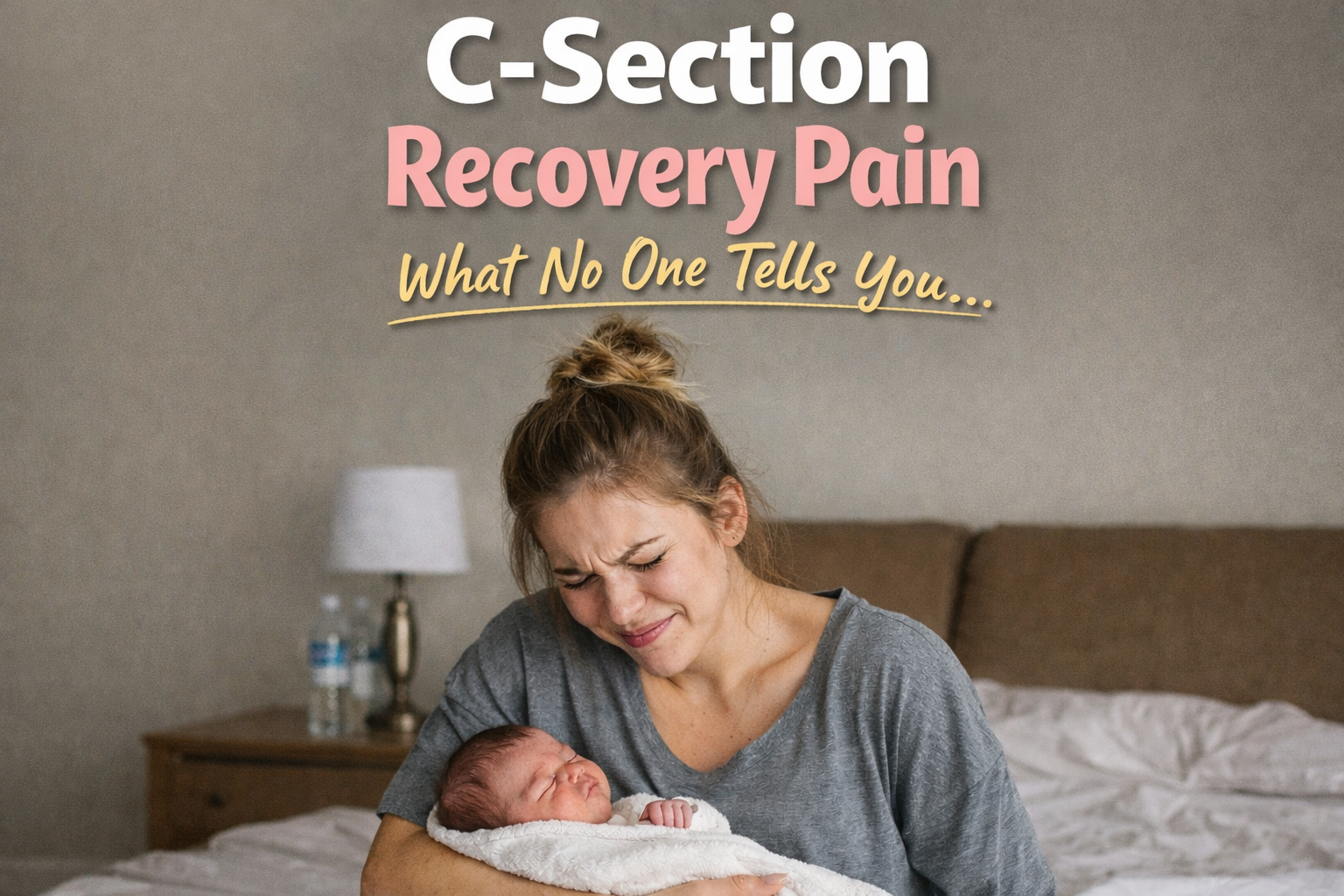
Experiencing pain after your C-section? Learn about all types of postpartum C-section pain, from incision discomfort to gas pain, plus proven relief strategies for new moms.

Congratulations on your new baby, mama! If you’ve just had a C-section, you might be wondering why nobody warned you about all the different types of pain you’d experience afterward. Between the joy of meeting your little one and the exhaustion of new motherhood, dealing with post-surgery pain can feel overwhelming.
Here’s the truth: a C-section is major abdominal surgery, and your body needs time to heal. But understanding what’s normal and knowing how to manage each type of pain can make your recovery so much smoother. Let’s walk through everything you need to know.
1. Incision Pain: The Main Event
What It Feels Like: Your C-section incision will likely be your primary source of pain in the first few weeks. You might feel sharp, burning, or pulling sensations around your lower abdomen. The pain is usually worst when you’re moving—getting out of bed, standing up, coughing, or laughing.
Why It Happens: Your surgeon cut through several layers of tissue, including skin, fat, fascia, and your uterus. All these layers need time to heal and reconnect.
How to Find Relief:
- Take your pain medication as prescribed—don’t wait until the pain is unbearable
- Use the “C-section shuffle”: walk bent slightly forward with small steps
- Support your incision when coughing, sneezing, or laughing by pressing a pillow against it
- Wear high-waisted, loose underwear that won’t rub against your incision
- Keep the area clean and dry to prevent infection
- Sleep on your back or side with pillows for support
- Try an abdominal binder for extra support (ask your doctor first)
When to Call Your Doctor: Contact your healthcare provider if you notice increased redness, warmth, swelling, pus, or if the pain suddenly worsens.
2. Gas Pain and Bloating: The Unexpected Surprise
What It Feels Like: Many new C-section moms are shocked by how painful gas can be. You might experience sharp pains in your shoulders, chest, or throughout your abdomen. It can feel like someone’s stabbing you from the inside.
Why It Happens: During surgery, air gets trapped in your abdominal cavity. Your digestive system also slows down from the anesthesia and pain medications, leading to uncomfortable gas buildup.
How to Find Relief:
- Walk as soon as your doctor allows—even tiny walks around your room help
- Try Gas-X or simethicone (ask your doctor first)
- Drink peppermint tea or suck on peppermint candies
- Avoid carbonated drinks and gas-producing foods initially
- Rock in a rocking chair to help move trapped gas
- Lie on your left side to help gas pass
- Stay hydrated to keep things moving
3. Uterine Cramping (Afterpains)
What It Feels Like: These feel similar to menstrual cramps but can be more intense, especially during breastfeeding. You might notice your belly tightening and releasing.
Why It Happens: Your uterus is contracting back to its pre-pregnancy size. Breastfeeding releases oxytocin, which triggers these contractions (that’s actually a good thing. It helps your body heal faster).
How to Find Relief:
- Use a heating pad on your lower abdomen
- Take ibuprofen as recommended by your doctor
- Practice deep breathing during contractions
- Empty your bladder frequently—a full bladder can make cramping worse
- Be patient—afterpains typically ease up after 3-7 days
4. Shoulder and Neck Pain
What It Feels Like: You might experience surprising pain in your shoulders, neck, or upper back that seems unrelated to your surgery site.
Why It Happens: Trapped gas from surgery can irritate the diaphragm, causing referred pain in your shoulders. Also, holding and feeding your baby in awkward positions puts strain on your upper body.
How to Find Relief:
- Walk to help disperse trapped gas
- Apply a heating pad to sore shoulders
- Try gentle shoulder rolls and neck stretches
- Use proper breastfeeding positions with lots of pillows for support
- Ask your partner to massage your shoulders and neck
- Consider a nursing pillow to reduce strain
5. Back Pain
What It Feels Like: Aching, stiffness, or sharp pain in your lower or upper back, especially after lying down for extended periods or while feeding your baby.
Why It Happens: Spinal anesthesia, prolonged bed rest, weakened core muscles, and the physical demands of caring for your newborn all contribute to back pain.

How to Find Relief:
- Maintain good posture when sitting and standing
- Use pillows strategically to support your back while nursing
- Apply heat or ice (whichever feels better)
- Do gentle pelvic tilts once your doctor clears you for movement
- Avoid heavy lifting beyond your baby’s weight
- Sleep on your side with a pillow between your knees
- Consider physical therapy if pain persists
6. Numbness and Nerve Pain Around the Incision
What It Feels Like: You might notice numbness, tingling, burning, or hypersensitivity around your incision site and lower abdomen. Some areas might feel completely numb while others are overly sensitive.
Why It Happens: Nerves were cut during surgery and need time to regenerate. This process can take months or even up to a year.
How to Find Relief:
- Be patient—nerve healing takes time
- Gently massage the area once fully healed (after 6-8 weeks)
- Wear soft, non-restrictive clothing
- Try silicone scar sheets after your incision has healed
- Talk to your doctor if the sensations become painful rather than just uncomfortable
7. Bladder and Bowel Discomfort
What It Feels Like: Painful urination, difficulty urinating, constipation, or pain during bowel movements. The first postpartum bowel movement can be genuinely scary.
Why It Happens: Surgery affects nearby organs, catheter use can cause temporary bladder sensitivity, and pain medications (especially opioids) cause constipation.
How to Find Relief:
For Bladder Issues:
- Drink plenty of water
- Don’t hold your urine—go when you feel the urge
- Pour warm water over yourself while urinating if it stings
- Contact your doctor if you have burning, urgency, or pain that persists
For Constipation:
- Take stool softeners starting the first day after surgery
- Eat fiber-rich foods like prunes, pears, and whole grains
- Stay well-hydrated
- Walk regularly to stimulate your digestive system
- Don’t strain—use a footstool to elevate your feet while on the toilet
- Try prune juice or gentle laxatives if needed
8. Breast Pain and Engorgement
What It Feels Like: Your breasts might feel rock-hard, swollen, hot, and extremely tender when your milk comes in (usually days 2-5 postpartum).
Why It Happens: Your body is producing milk for your baby, and sometimes produces more than needed initially, causing painful engorgement.
How to Find Relief:
- Nurse frequently (every 2-3 hours)
- Apply cold compresses between feedings
- Use warm compresses or take a warm shower before nursing to help milk flow
- Hand express or pump a little milk if needed for comfort
- Wear a supportive nursing bra
- Take ibuprofen for pain and inflammation
- Contact a lactation consultant if you’re struggling
9. Emotional Pain and “Baby Blues”
What It Feels Like: Crying spells, anxiety, mood swings, irritability, or feeling overwhelmed. This is completely normal and affects about 80% of new mothers.
Why It Happens: Dramatic hormone shifts, physical recovery, sleep deprivation, and the massive life change of becoming a parent all play a role.
How to Find Relief:
- Accept help from friends and family
- Rest when you can—yes, “sleep when baby sleeps” is cliché but helpful
- Talk about your feelings with your partner, friends, or family
- Go easy on yourself—you’re recovering from major surgery while caring for a newborn
- Get outside for short walks when you’re able
- Connect with other new moms online or in person
When to Call Your Doctor: If feelings of sadness, anxiety, or hopelessness intensify or last beyond two weeks, contact your healthcare provider. Postpartum depression is treatable, and you deserve support.
General Recovery Tips for All Types of Pain
The First Two Weeks: This is your time to focus entirely on recovery and bonding with your baby. Accept that you’ll need help with everything else.
- Stay ahead of pain: Take medications on schedule, not just when pain peaks
- Move gently but regularly: Short, frequent walks help with everything from gas to mood
- Hydrate constantly: Keep water within arm’s reach at all times
- Prioritize protein: Your body needs it to heal
- Set up stations: Create comfortable spots around your home with everything you need
- Accept limitations: You won’t be able to do normal activities yet, and that’s okay
Your Recovery Timeline (What’s Normal)
Days 1-3: Most intense pain; you’ll need significant help with baby care and mobility Week 1-2: Gradual improvement; still need pain medication but starting to feel more mobile Weeks 2-4: Noticeably better; may still have discomfort but managing with less medication Weeks 4-6: Most acute pain resolved; ready for your postpartum checkup Months 2-6: Continued healing; some numbness and tightness is normal 6-12 months: Full internal healing; most women feel completely recovered

Remember, every woman’s recovery is different. Some bounce back quickly, while others need more time. Neither is wrong.
Red Flags: When to Call Your Doctor Immediately
While most postpartum pain is normal, some symptoms require immediate medical attention:
- Fever over 100.4°F (38°C)
- Incision that’s hot, increasingly red, or leaking pus
- Sudden increase in pain or pain that’s not responding to medication
- Foul-smelling vaginal discharge
- Heavy bleeding (soaking a pad in an hour)
- Chest pain or difficulty breathing
- Severe headache that won’t go away
- Painful, swollen, red area on your leg
- Thoughts of harming yourself or your baby
Don’t hesitate to call—it’s always better to check and be reassured than to ignore something serious.
Final Thoughts: You’re Doing Amazing
Recovery from a C-section while caring for a newborn is no joke. You’re healing from major surgery, dealing with hormonal changes, sleep deprivation, and learning to care for a tiny human—all at the same time.
Some days will be harder than others. You might cry in the shower or feel frustrated that you can’t move the way you want to. That’s all completely normal.
Be gentle with yourself. Your body just performed an incredible feat bringing your baby into the world. Give yourself grace, accept help, stay in touch with your healthcare provider, and trust that with each passing day, you’re healing and getting stronger.
You’ve got this, mama. One day at a time. 💙
This article is for informational purposes only and doesn’t replace medical advice. Always consult your healthcare provider about your specific situation and symptoms.
Leave a Reply